Manufactured Landscapes Series
This series addresses environmental degradation, land possession, cultural erasure, and ecological tipping points. These works examine the consequences of human intervention in the natural world and underscore the urgency of environmental responsibility.
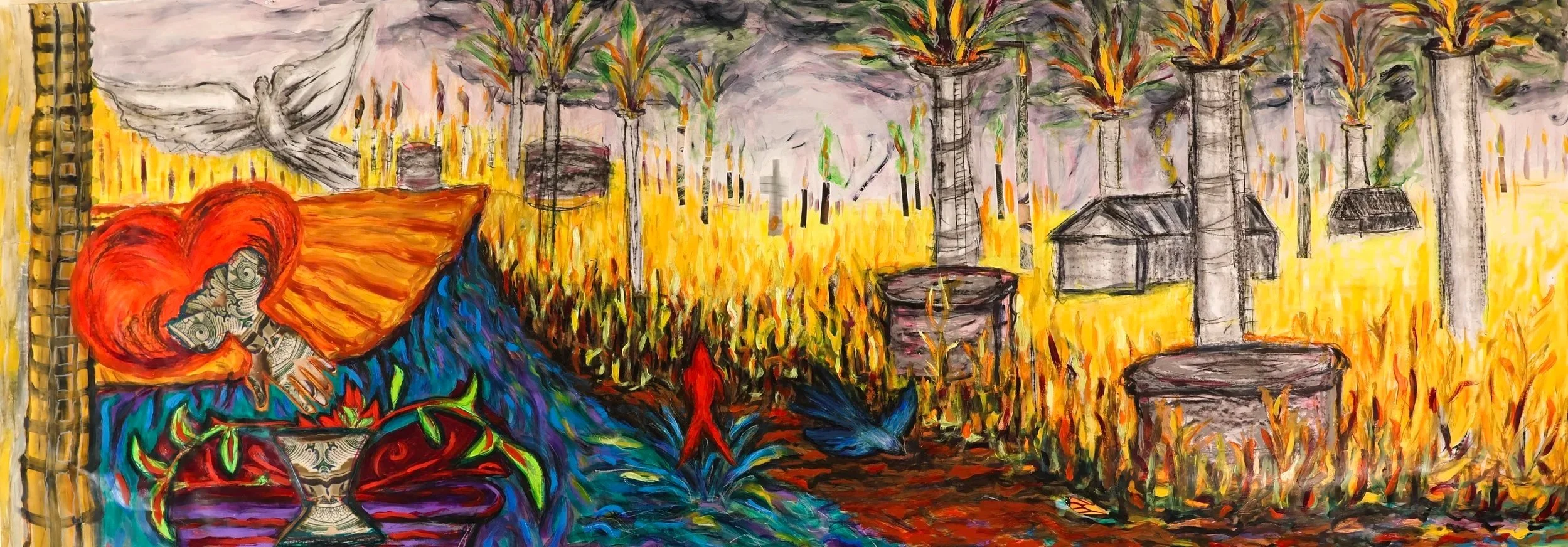
1. "51 Miles of the Houston Ship Channel" (2025, 96 x 32, acrylic paint on acid-free paper). Once a lush green watershed, the Houston Ship Channel has been remade into one of the most polluted industrial corridors in the United States. Marshes gave way to refineries, wetlands to smokestacks, and a living estuary became a landscape shaped by extraction. Since the 1950s, the people who have lived along its banks have breathed air laced with toxic pollutants, enduring decades of elevated health risks. By the 1970s, the dangers were already well documented. Yet inadequate regulation and weak enforcement allowed the petrochemical industry to continue polluting with little consequence, compounding harm to communities, ecosystems, and the climate. In Left in the Dark: Human Rights and Pollution Along the Houston Ship Channel (2024), Amnesty International describes this region as a "sacrifice zone"—a place where the costs of industrial prosperity are borne disproportionately by those with the least power to resist them. The neighborhoods that border these facilities are predominantly Latinx/Hispanic and Black, exposing a persistent pattern of environmental racism in which race, geography, and pollution have become inseparable. See Amnesty International, Left in the Dark: Human Rights and Pollution Along the Houston Ship Channel (2024): https://www.amnesty.org/en/documents/amr51/7566/2024/en/
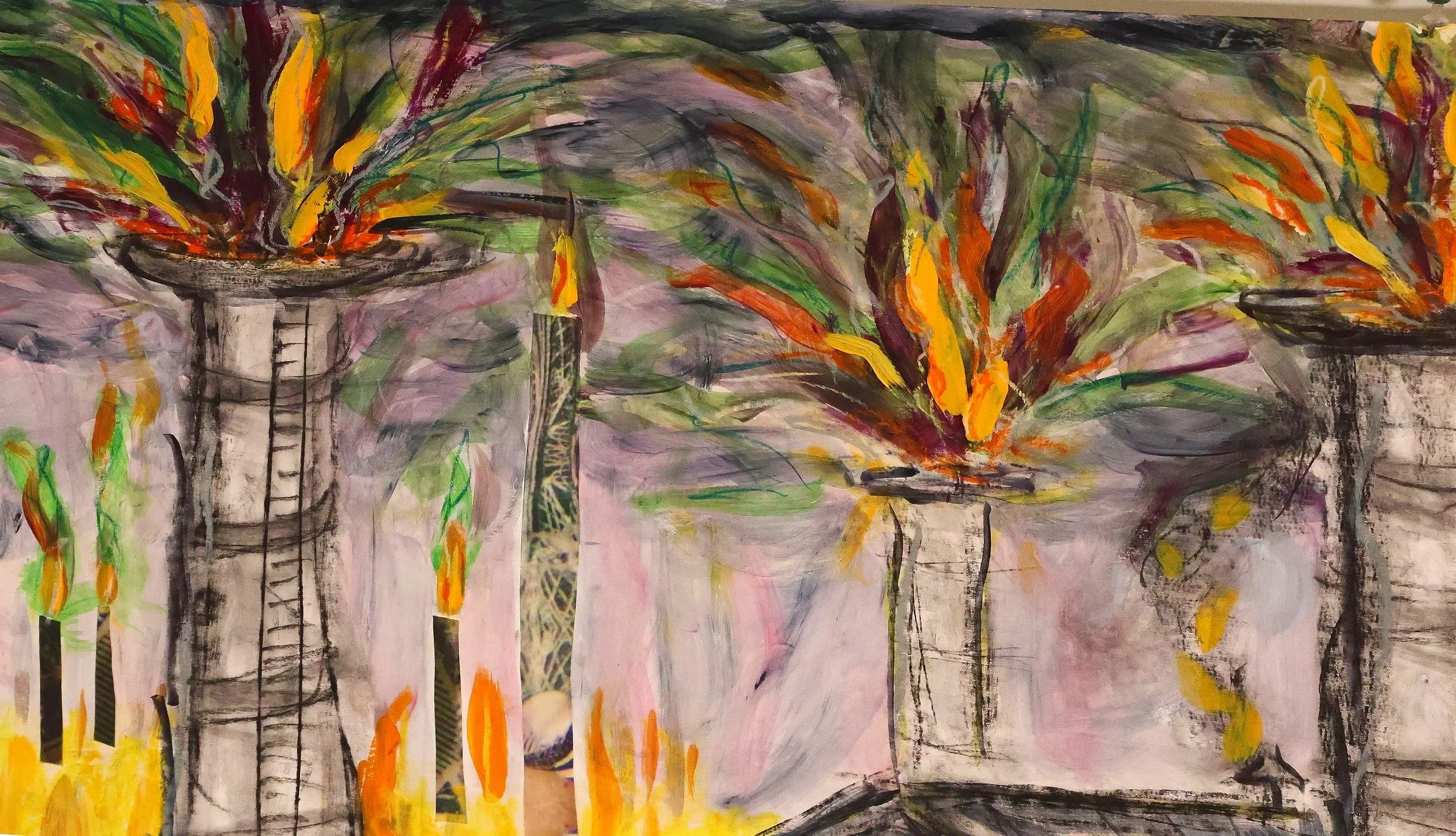
"51 Miles of the Houston Ship Channel ", detail of petrochemical waste smokestacks that line the East Texas waterway.
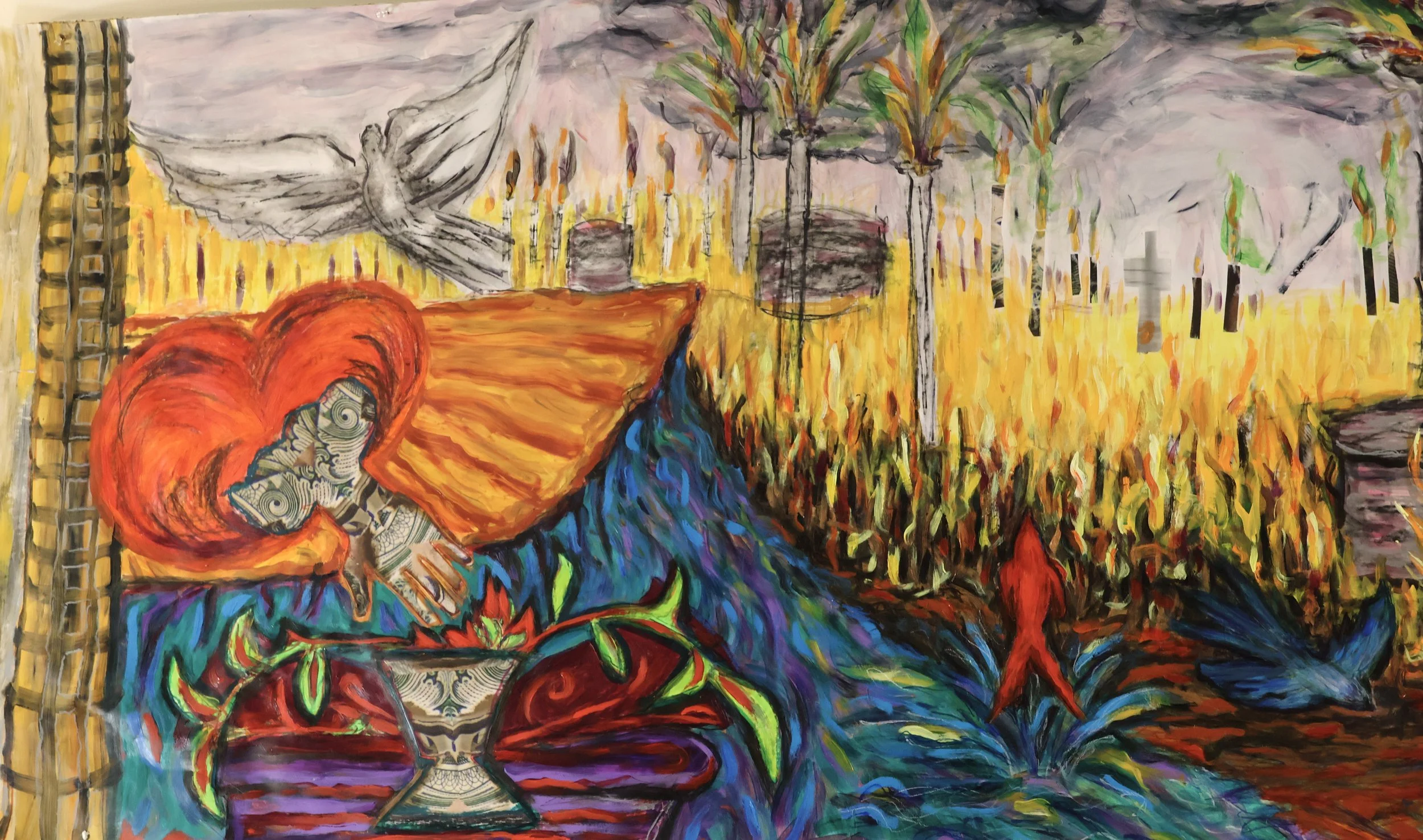
"51 Miles of the Houston Ship Channel", detail of the "Hand of Greed" reaching into the bounty of the earth.
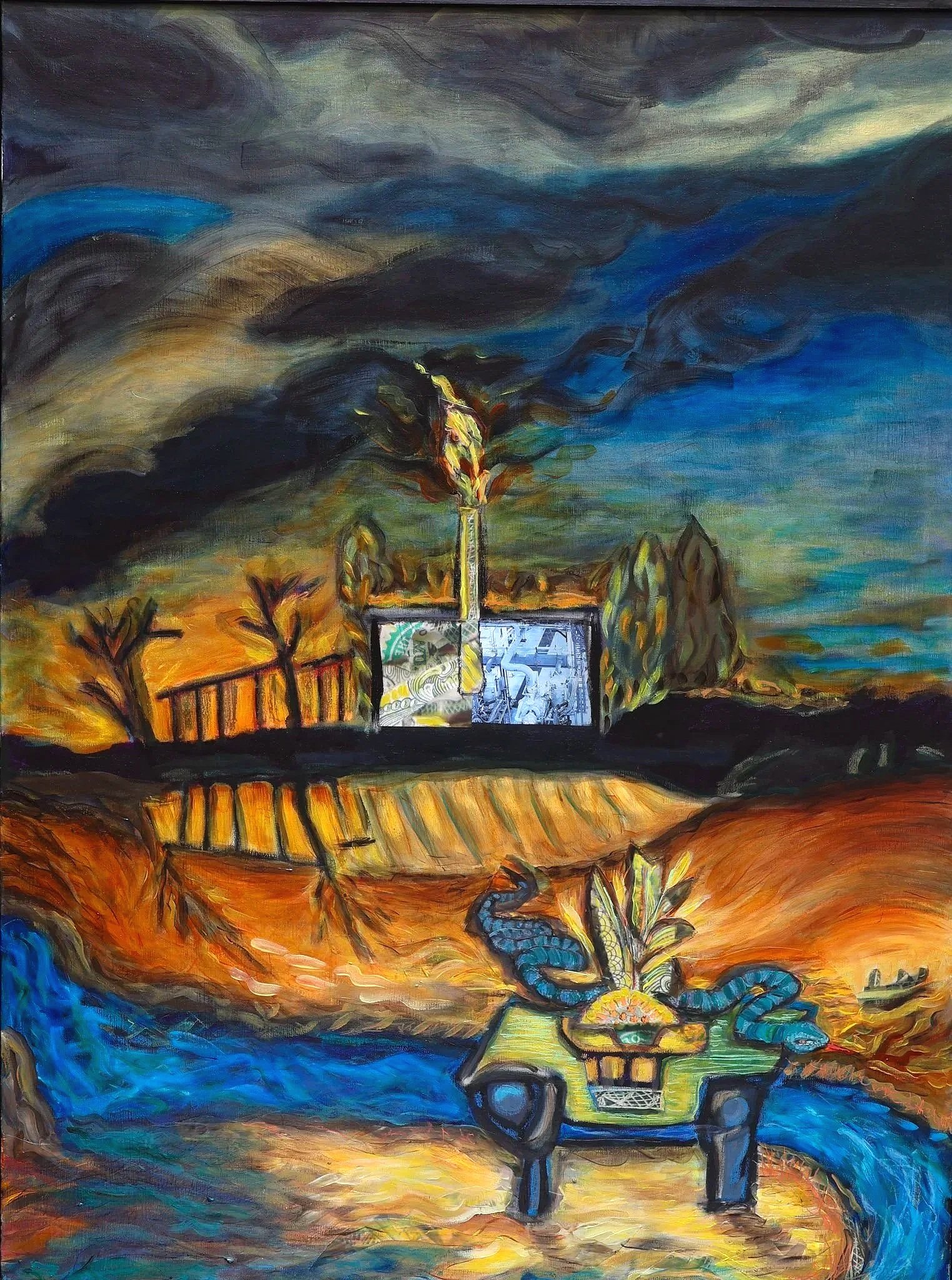
2. "Manufactured Landscapes: At the Edge of Everything" (2026, 36 x 48) represents an environmental tipping point. We see a devastated landscape sitting atop a melting glacier. A single factory smokestack represents our ongoing burning of fossil fuels. In the foreground, a table holds flowers and a “horn of plenty” fashioned from dollar bills. The snake suggests greed and treachery. The table breaks away as the ice and land melt together.
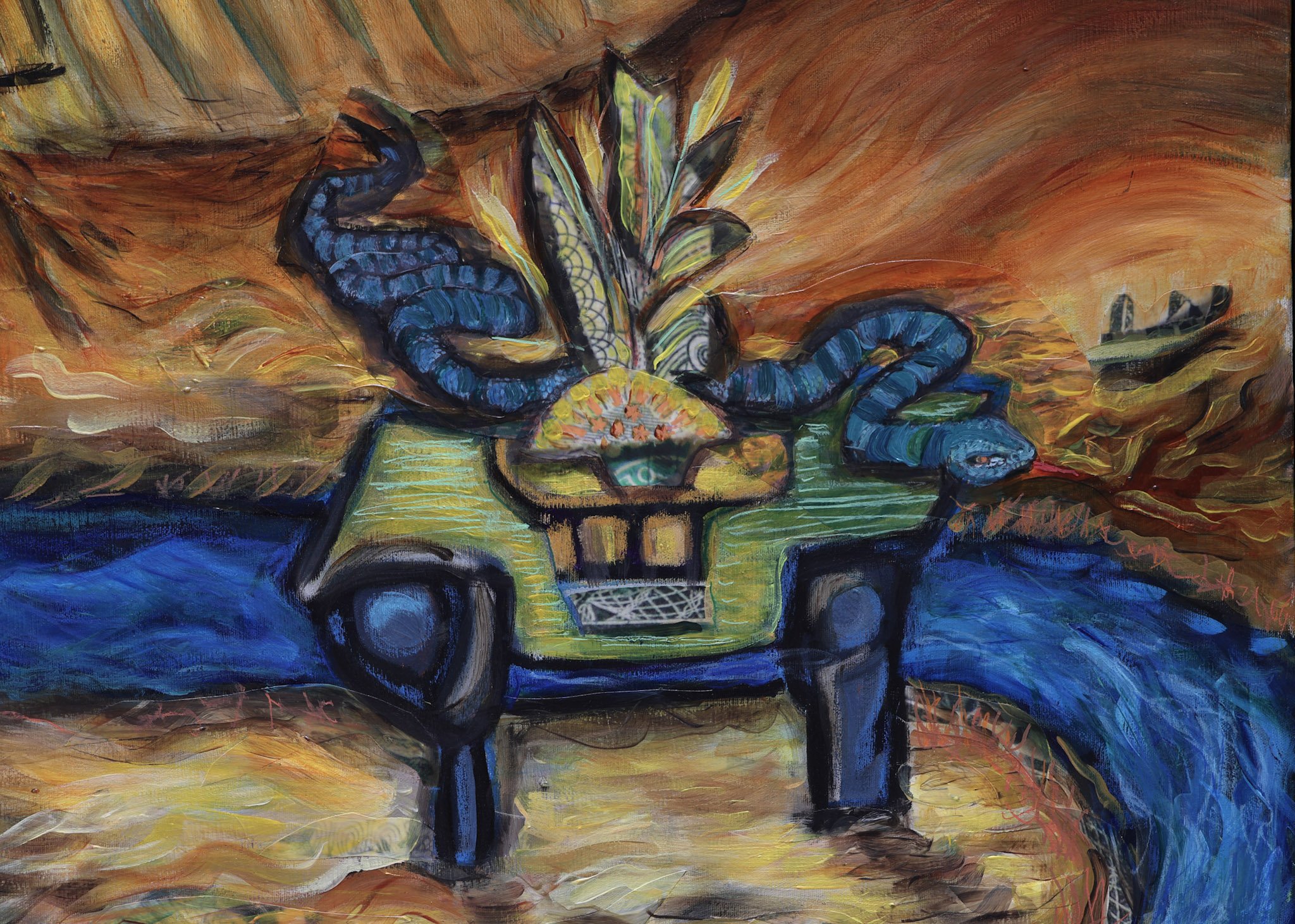
2 c. "Manufactured Landscapes: At the Edge of Everything" detail
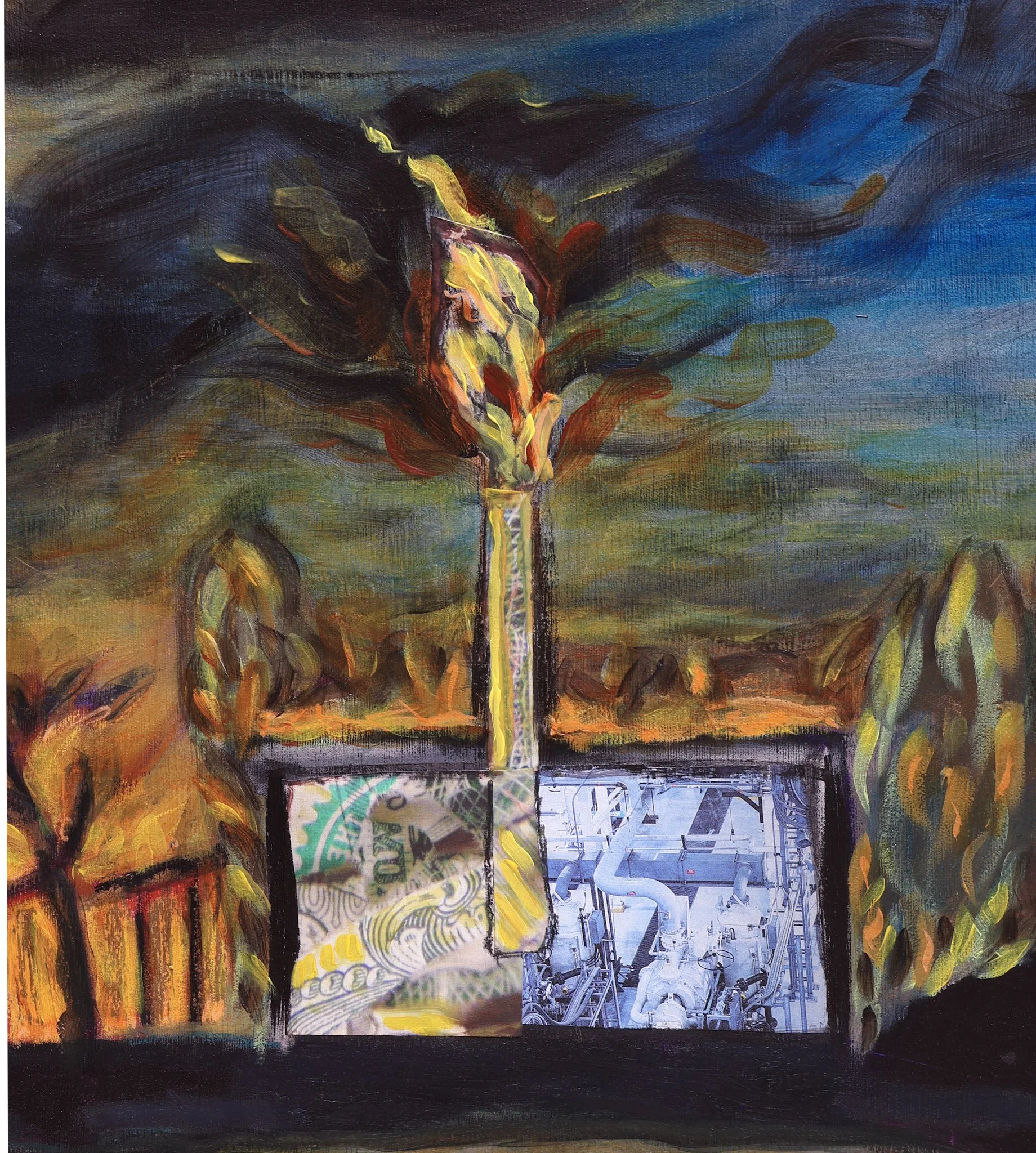
2 b. "Manufactured Landscapes: At the Edge of Everything" detail.
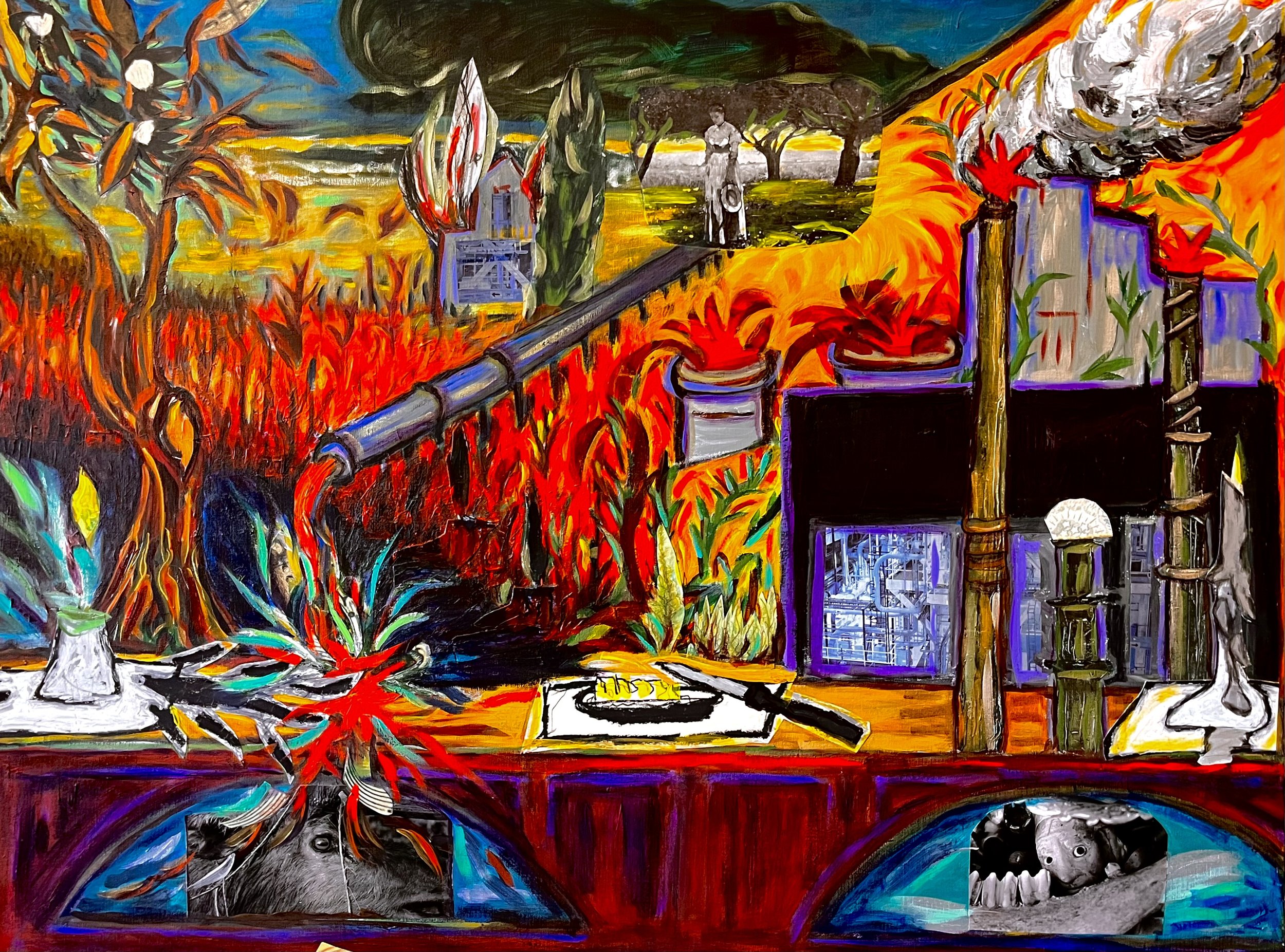
3. "Even Nostalgia Could Not Stop Us" (2025, 36 x 30).
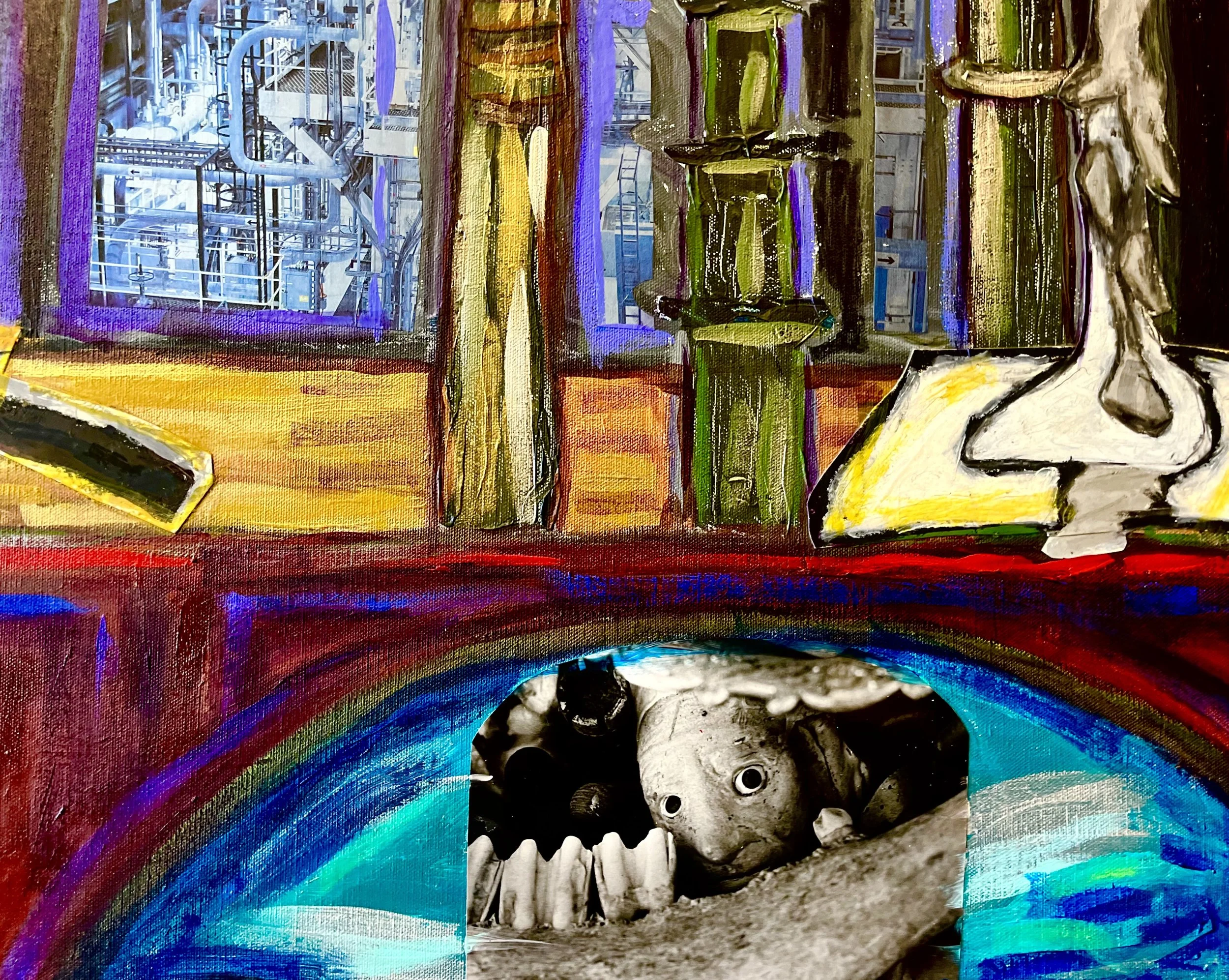
3 b. "Even Nostalgia Could Not Stop Us" detail
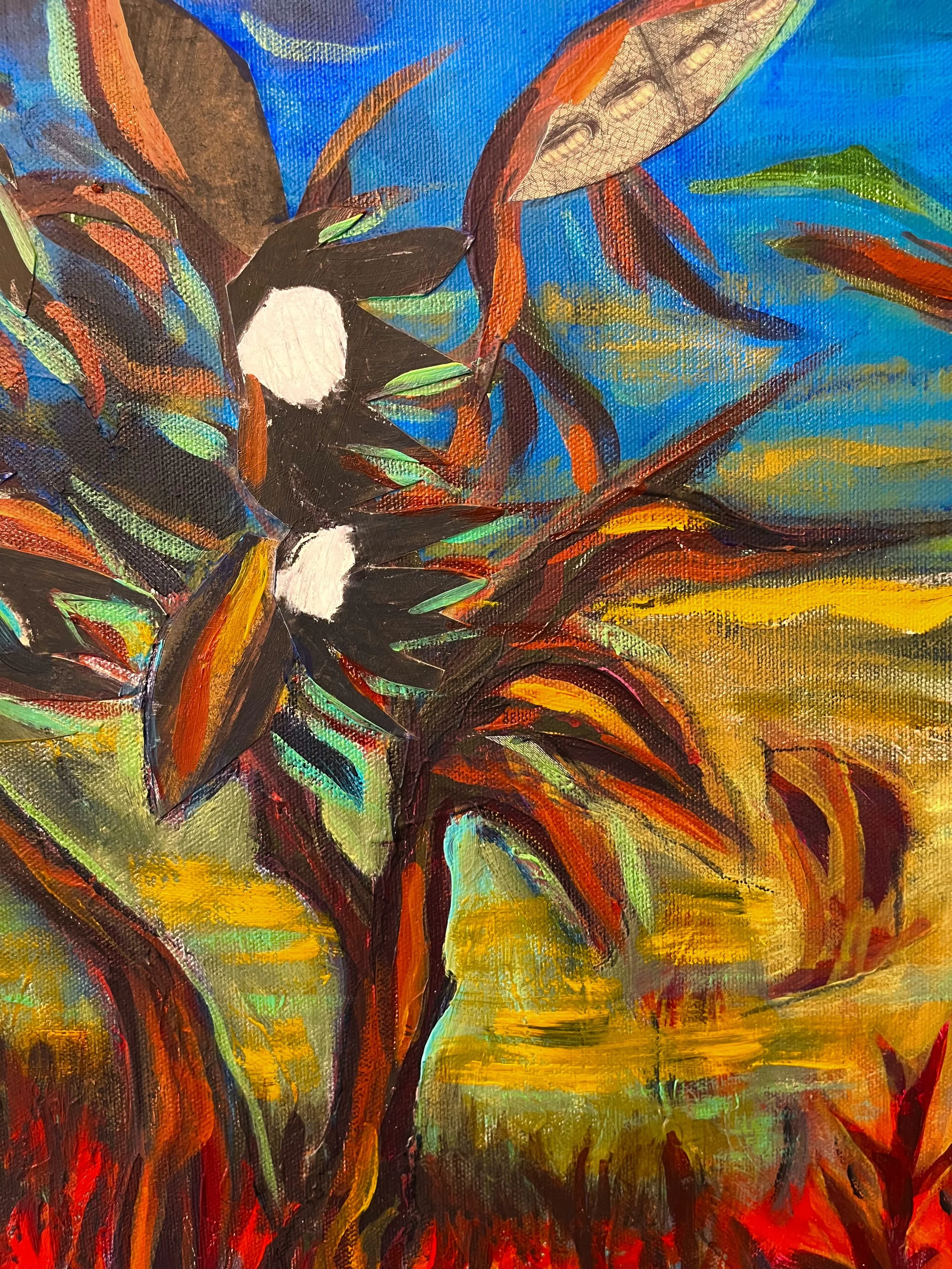
3 e. "Even Nostalgia Could Not Stop Us" detail
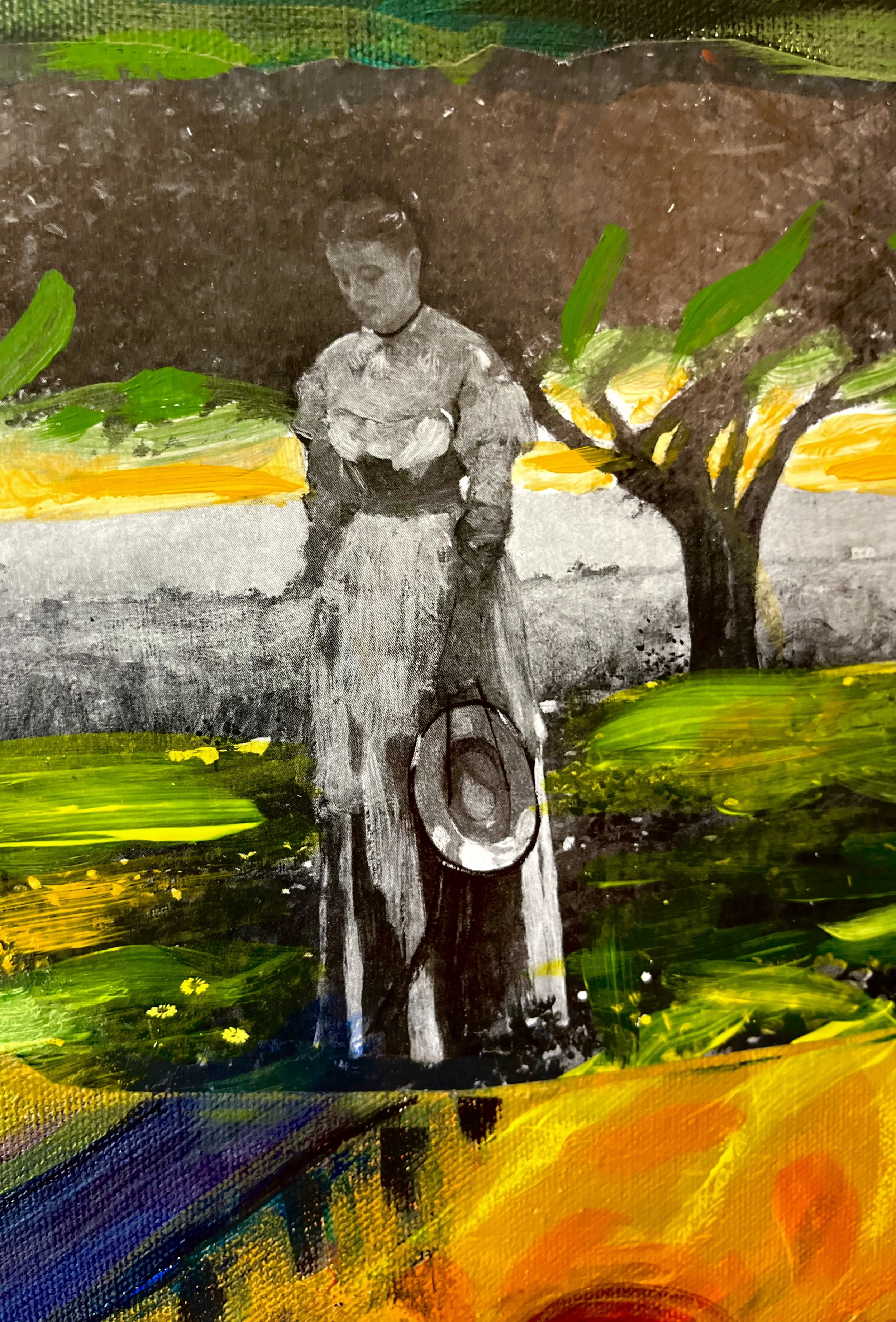
3 a. "Even Nostalgia Could Not Stop Us" detail
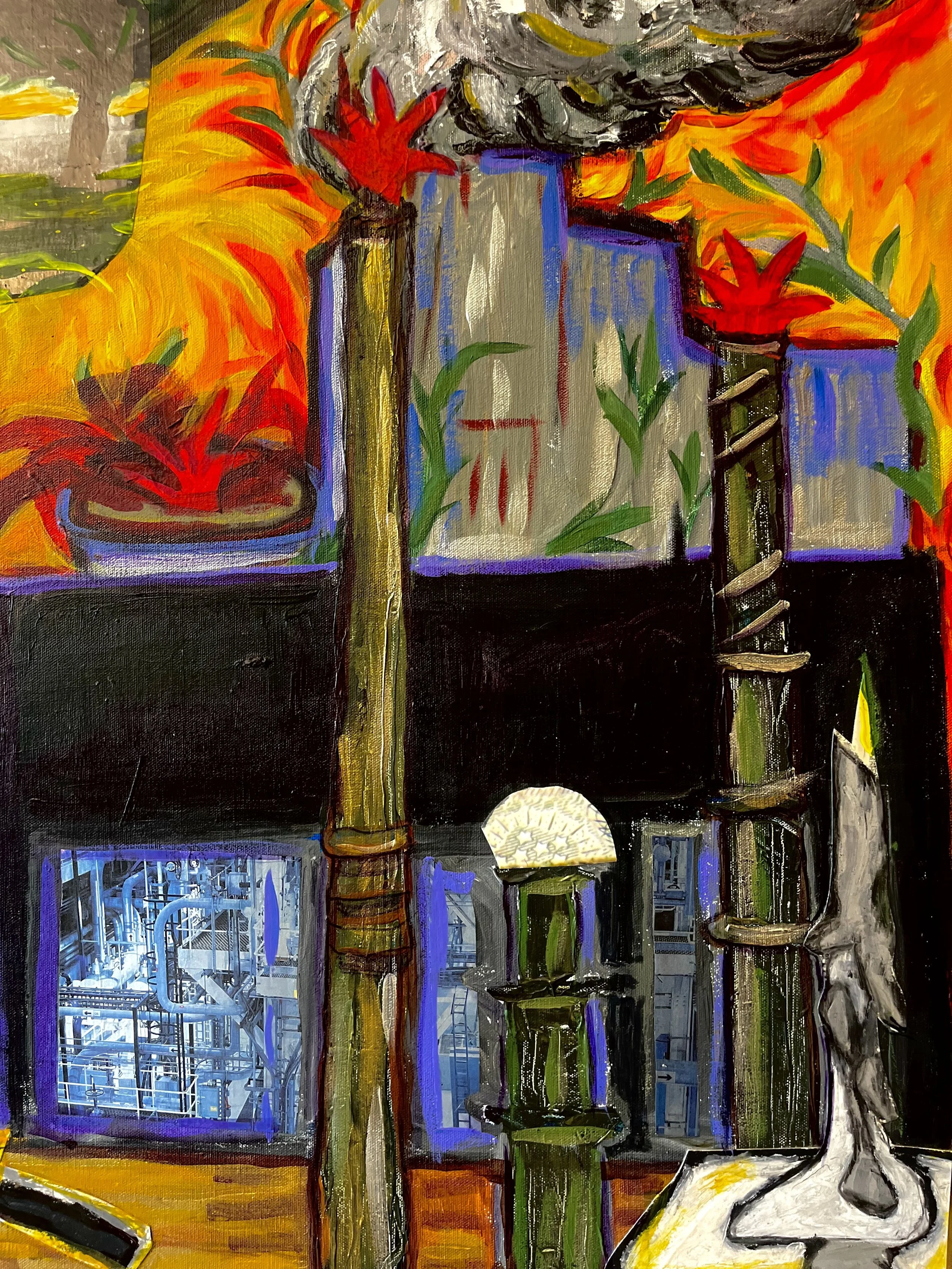
3 d. "Even Nostalgia Could Not Stop Us" detail
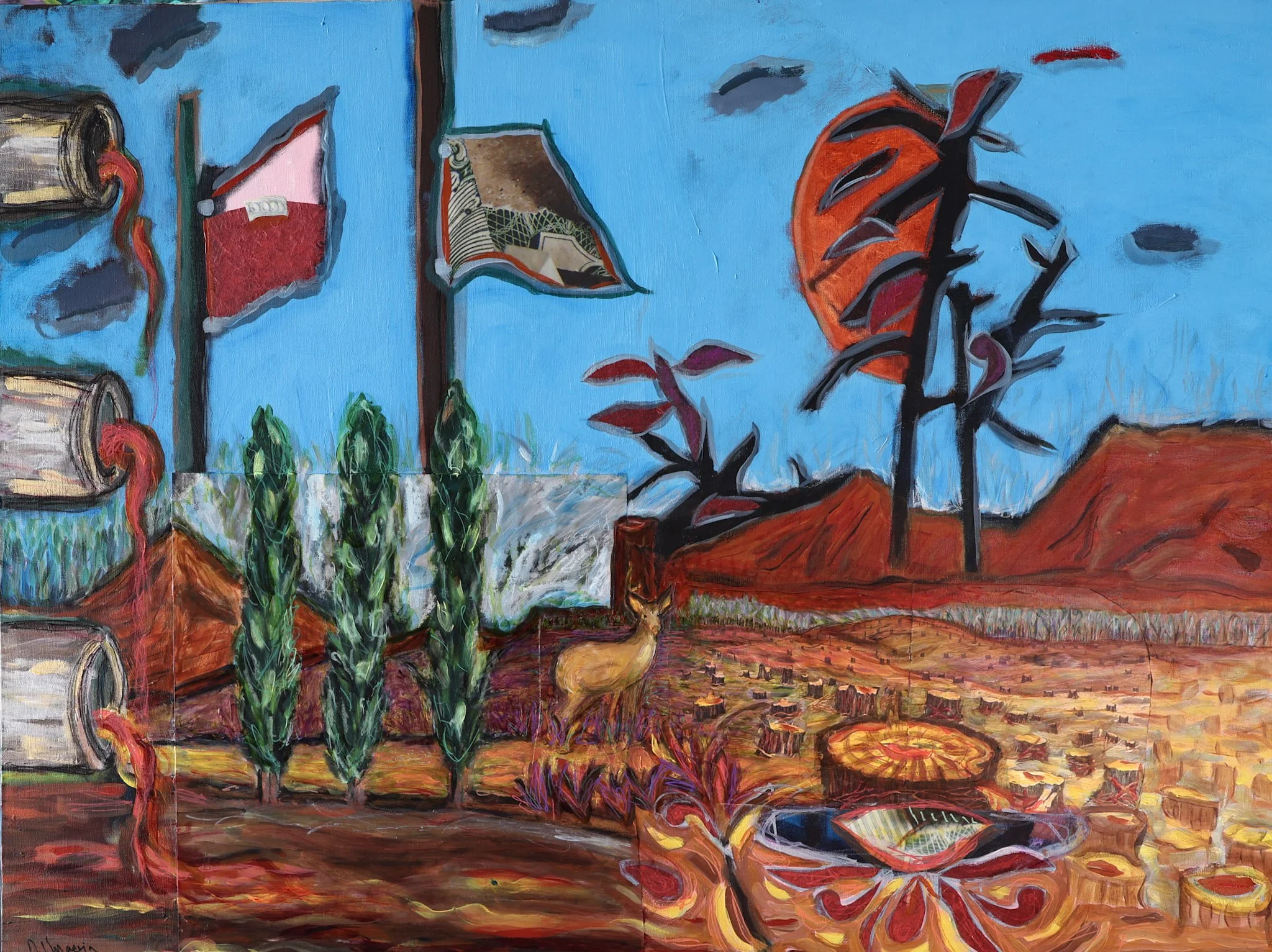
4. "Manufactured Landscapes: First Possession" (2026, 48 x 36) is the first in a series of works that address environmental degradation. This painting refers to 18th century land possession, cultural erasure of indigenous peoples, and introduction of guns and industrial pipes. In the image we see early American clear-cutting of trees, the planting of territorial markers (flags), and the insertion of barrels (far left side) representing guns and oil pipelines.
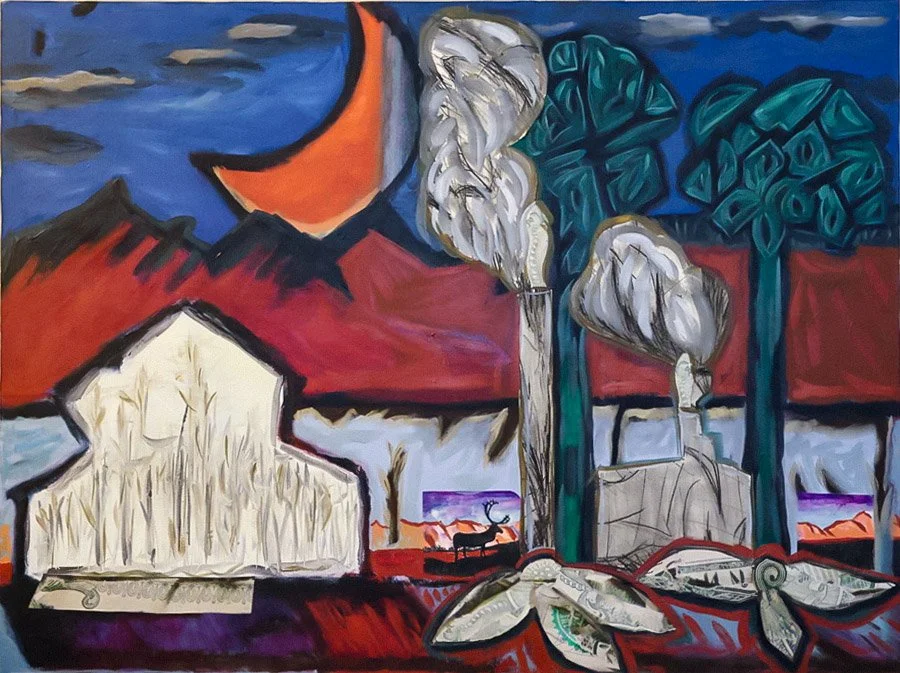
5. "Manufactured Landscapes: Cultivation" (2024, 36 x 48)
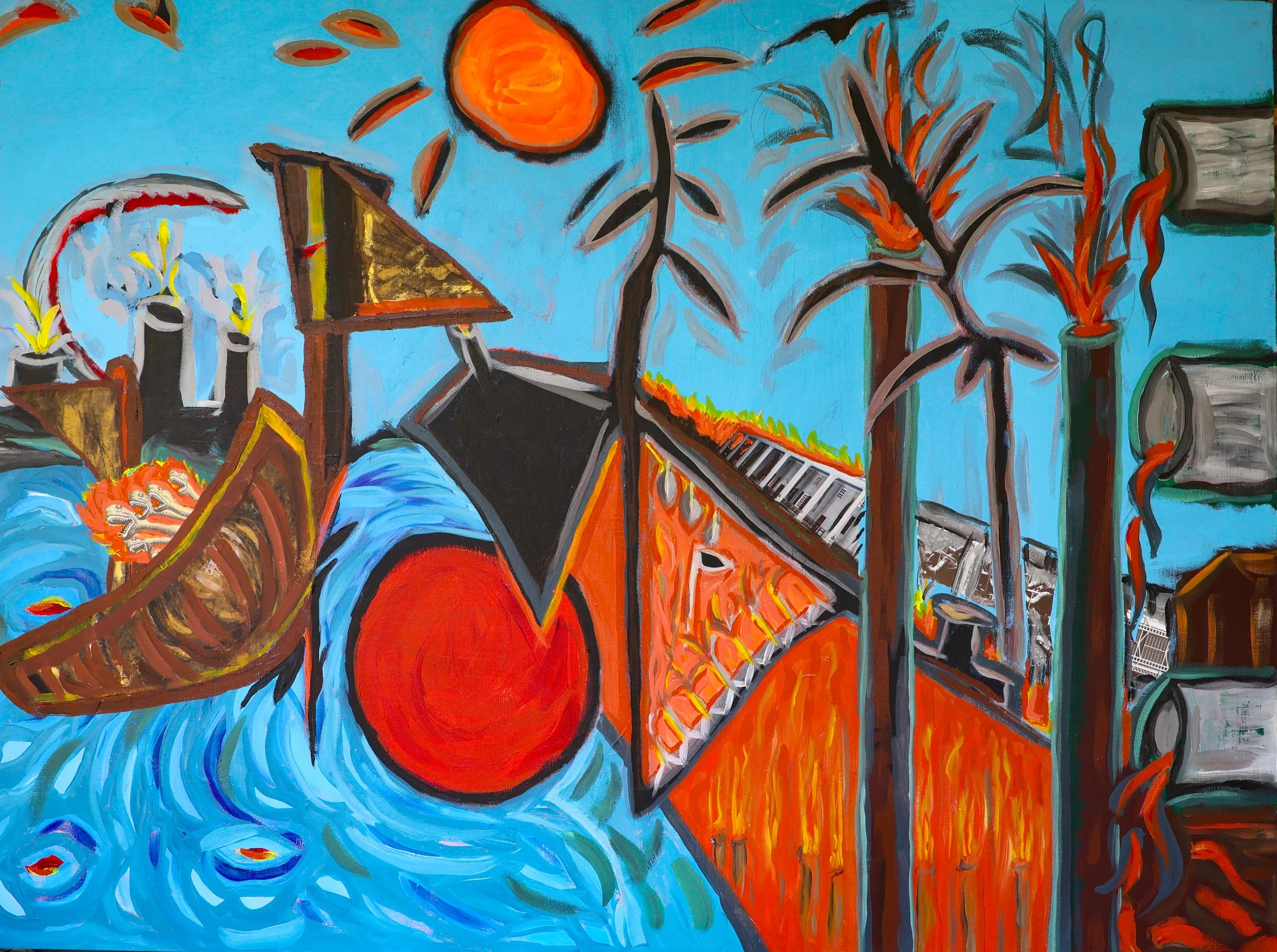
6. "Manufactured Landscapes: Hot Tipping Point" (2025, 36 x 48).
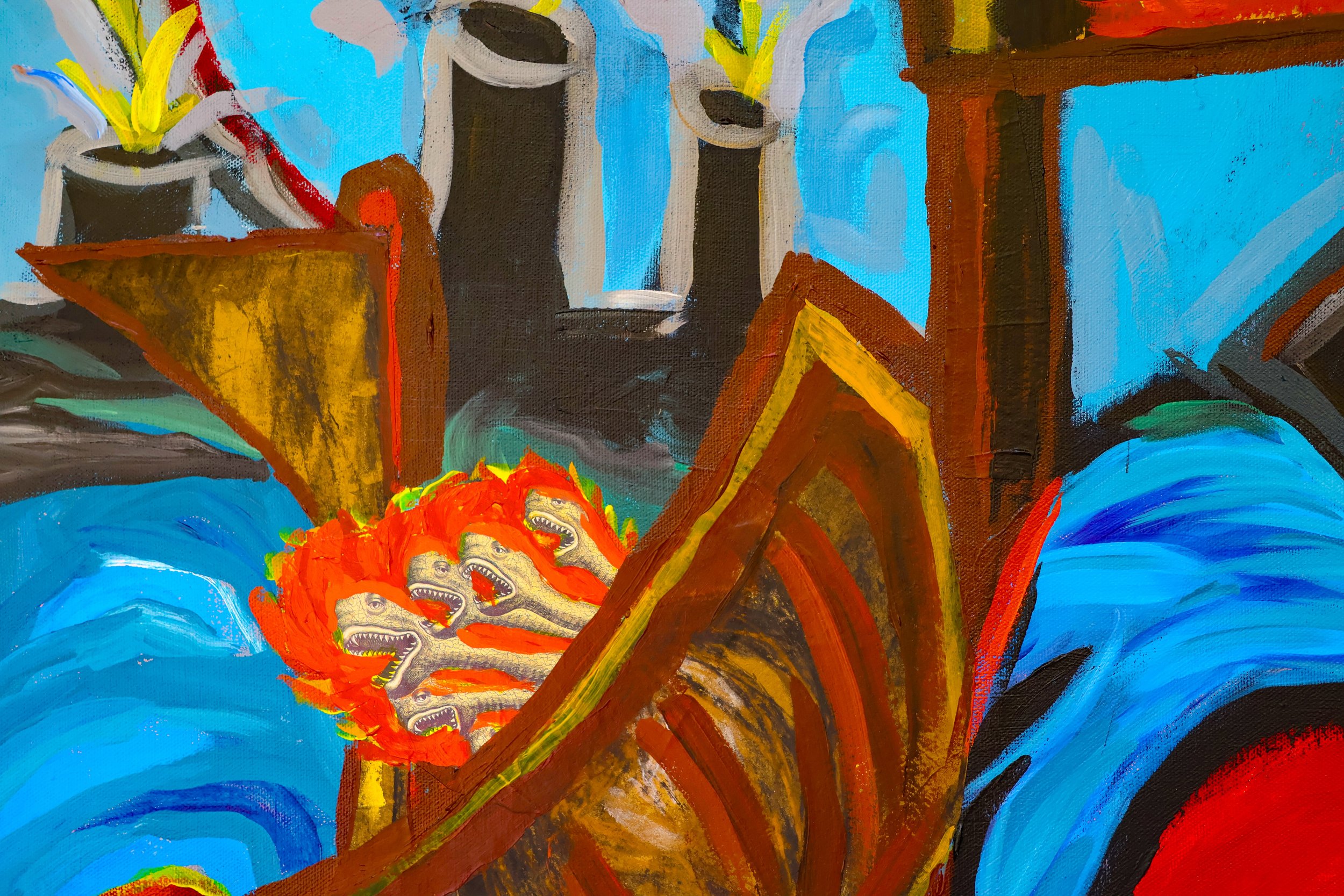
6 b. "Manufactured Landscapes: Hot Tipping Point" detail.
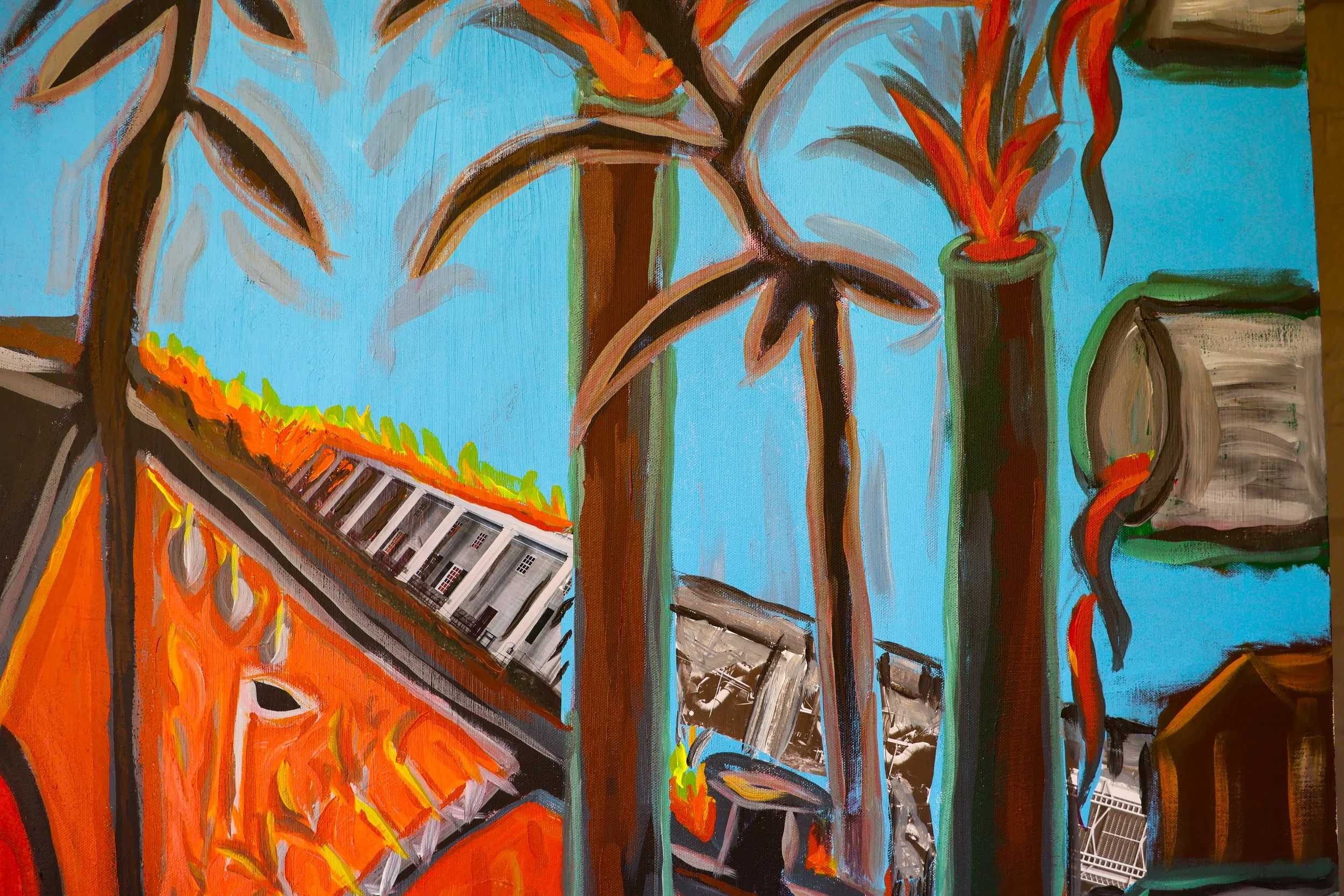
6 a. "Manufactured Landscapes: Hot Tipping Point" detail.
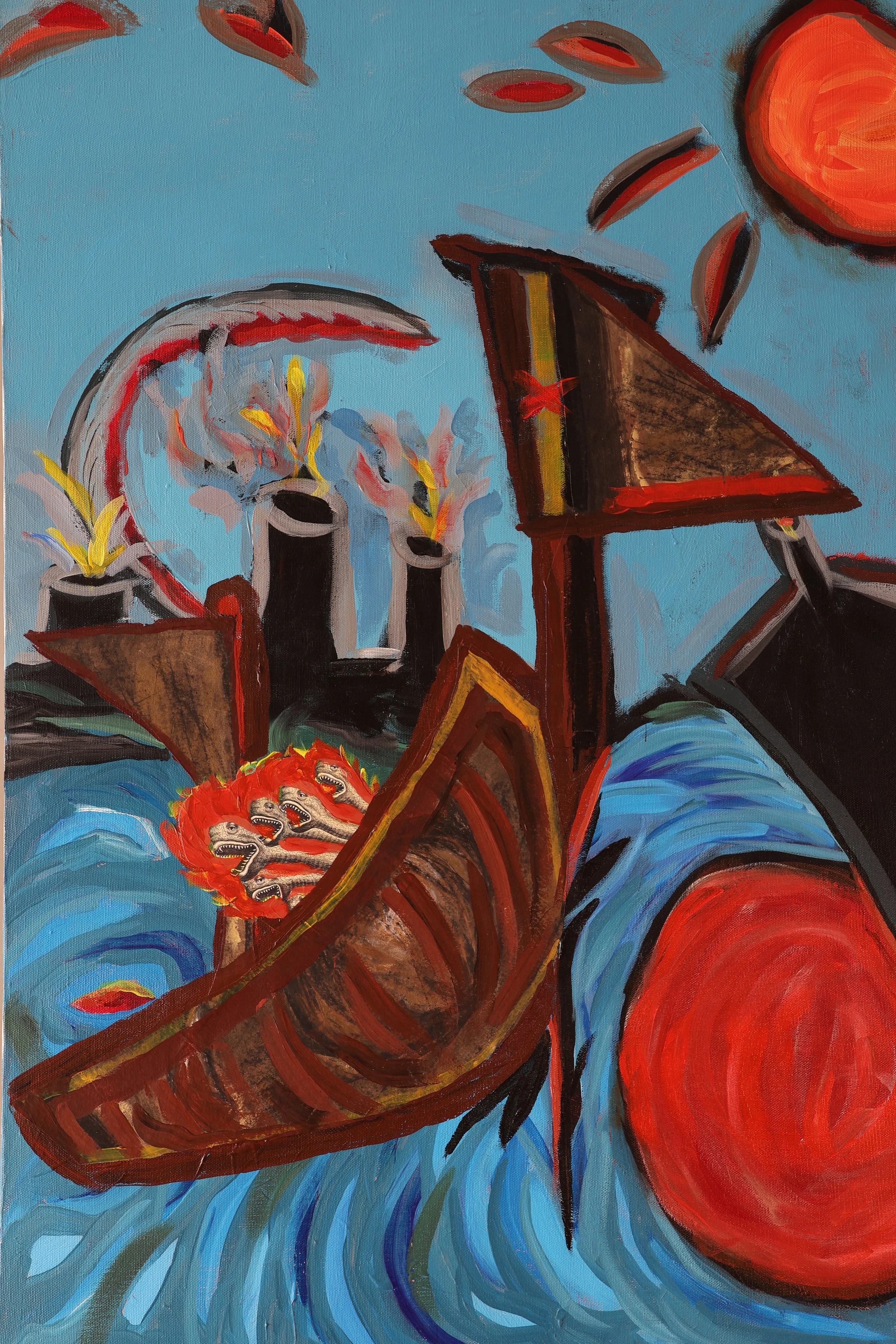
6 c. "Manufactured Landscapes: Hot Tipping Point" detail.